Reviewing Surface Treatments: Decorating, Printing and Bonding on Plastic IS Possible
Comments Off on Reviewing Surface Treatments: Decorating, Printing and Bonding on Plastic IS Possible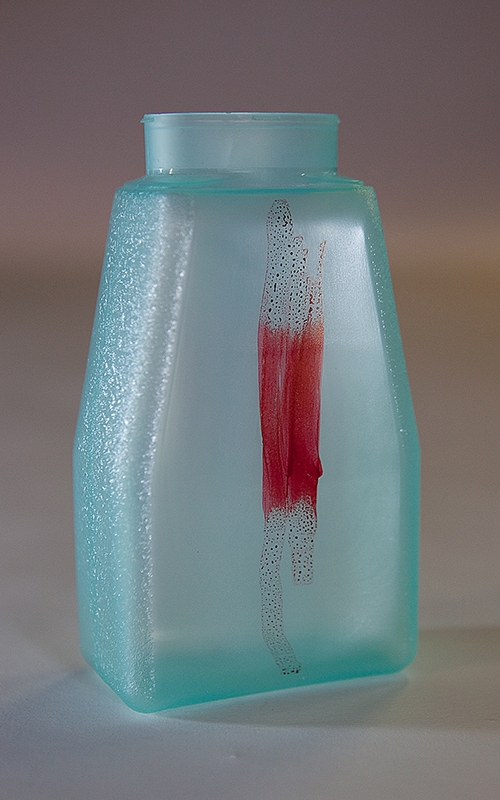
This plastic bottle has been plasma-treated in the center only. Note how the ink bonds to the surface where treated but beads up where the bottle was not treated.
From Plastics Decorating Magazine’s Enews July 2020
By Gary Kohlnhofer, Senior Sales Engineer, 3DT LLC
Polymers have many useful properties, making them the material of choice. Polypropylene and polyethylene are prime examples. However, polymers typically have insufficient surface energy and poor wettability for most printing and bonding applications. Fortunately, corona and plasma surface treatment modify the surface of polymer substrates and raise their surface energy for printing, coating, painting and adhesive applications. As a result, the usefulness of polymers greatly increases for decorating and bonding applications.
Let’s take a look at each of these methods of surface treatment, their applications and benefits:
What is corona treatment?
Corona treatment makes use of a generator and high voltage transformer to create a high voltage/high frequency corona discharge applied through an electrode with small airgap onto the surface to be treated. The result is a cloud of ionized air – or corona discharge – which then is used for the surface treatment of plastics and other materials.
A substance placed under the corona discharge is impacted by electrons with energy two to three times that necessary to break the molecular bonds on the surface. The resulting free radicals rapidly react with the oxidation of products in the corona discharge or with adjoining free radicals on the same or different chain, resulting in a cross-link. Oxidation of the surface increases the surface tension or surface energy, allowing for better wetting by liquids and promoting adhesion.
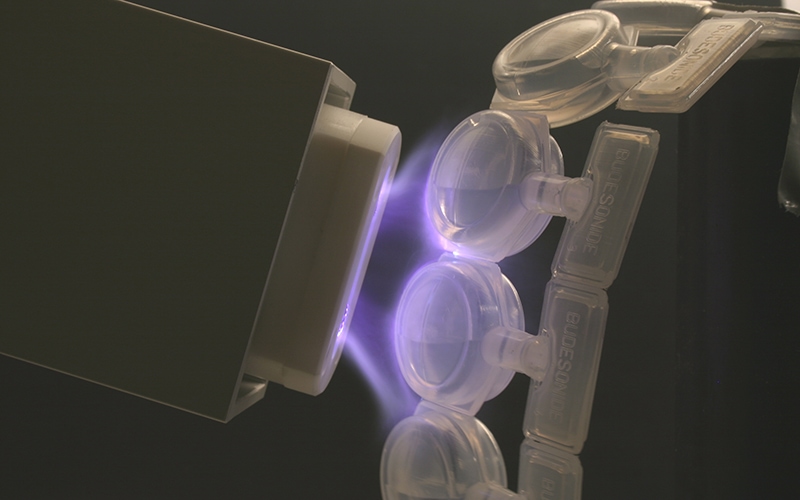
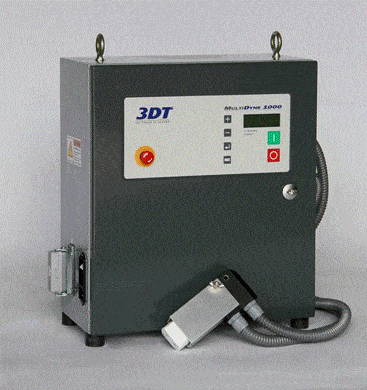
In the photo to the right, MultiDyne’s discharge treats ampules before printing.
How is corona used in relation to plastics decorating?
Corona treatment often is used inline on web-based printing machines, such as for treating label materials. Films such as polypropylene and polyethylene, for example, are treated inline prior to the digital printing decks to increase the surface tension and improve wettability and adhesion of digital inks. With these inline corona treating systems, the web is threaded over a treater roller and high voltage/high frequency power is applied to the electrode resulting in corona discharge through a small airgap. Corona treating systems also can be used on a high-speed cup decorating line, treating the cup on a mandrel prior to the printing decks.
What types of applications or surfaces is corona treatment better suited for and why?
Corona discharge effectively improves the surface tension on numerous materials that show poor or no adhesion properties to media, such as printing inks and adhesives.
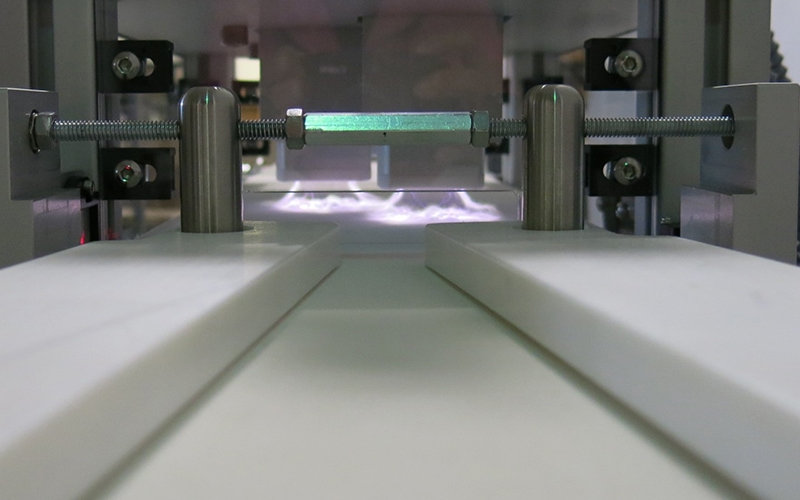
This MultiDyne system with two treating heads and a conveyor is designed for improving adhesion on small parts.
Corona treating systems lend themselves to many applications, such as inline printing presses, but discreet parts can be treated as well with custom conveyor-based systems. A conveyor-based system using rotating electrodes treats different shapes and sizes without set up changes.
These systems are very user-friendly and provide for uniform, repeatable surface treatment and high production rates. Individual parts also can be treated in fixtures with corona treatment delivered by custom electrodes and generator configurations.
What are the benefits and challenges of this particular treatment?
The benefits of the corona treatment process include the ability to print on substrates that otherwise would not be possible. Users also benefit from better print quality and faster printing line speeds, resulting in higher production and output.
What is plasma treatment?
Plasma surface treatment (also called in-air and atmospheric plasma) improves the wetting properties of polymeric materials, rubber, metals, glass, ceramics, paperboard and more. The molecules of these difficult-to-bond materials are modified by the plasma process to obtain better adhesion without causing harm to the surface.
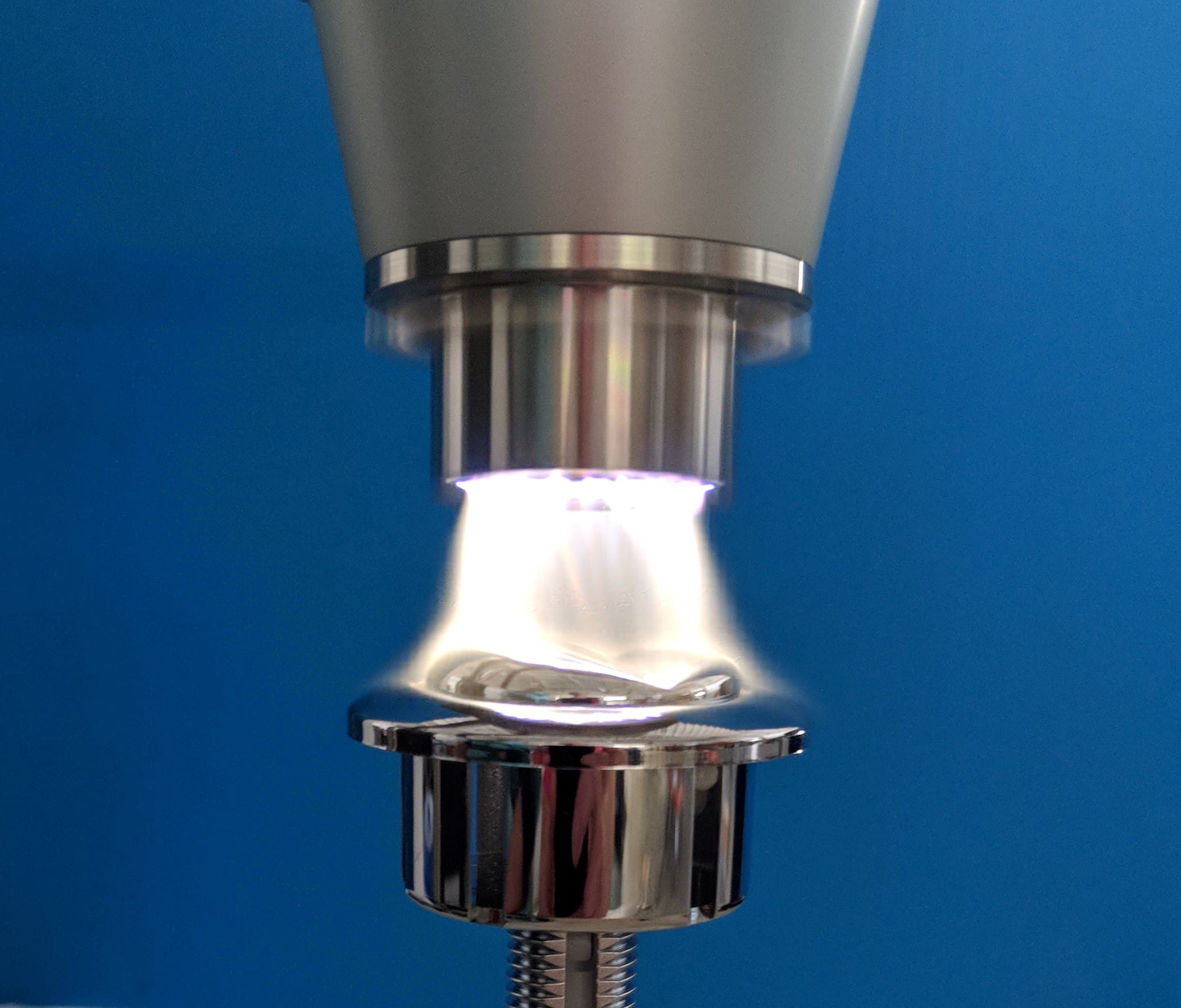
PlasmaDyne PRO rotating head treats a metallized plastic part to improve adhesion of ink/paint.
Atmospheric plasma is created by combining reactive gas molecules and an electric field. This technology uses one or more high voltage electrodes which charge the surrounding blown gas molecules, resulting in a highly ionized field that is forced onto a targeted surface. This highly ionized air stream creates a thermal property that reacts with the substrate and breaks the existing hydrogen bonds by introducing oxygen which recreates the chemical properties of the surface. The atmospheric plasma process causes an intensified reaction with the material, resulting in better wettability, stronger bonding traits and micro-cleaned surfaces.
How is it typically applied/integrated into the workflow?
Plasma treating systems often are placed just prior to printing on inline printing production lines. The plasma treating head is mounted above a profile allowing the material to pass under the treating head and then the printing head improving the adhesion of the digital inks. Alternately, individual parts can be placed in a fixture then inserted into a plasma treating system set up to index the treating head back and forth over the parts, treating the top surface of the parts. Once treated, this fixture can be inserted into the digital printer for improved printability thanks to plasma treatment.
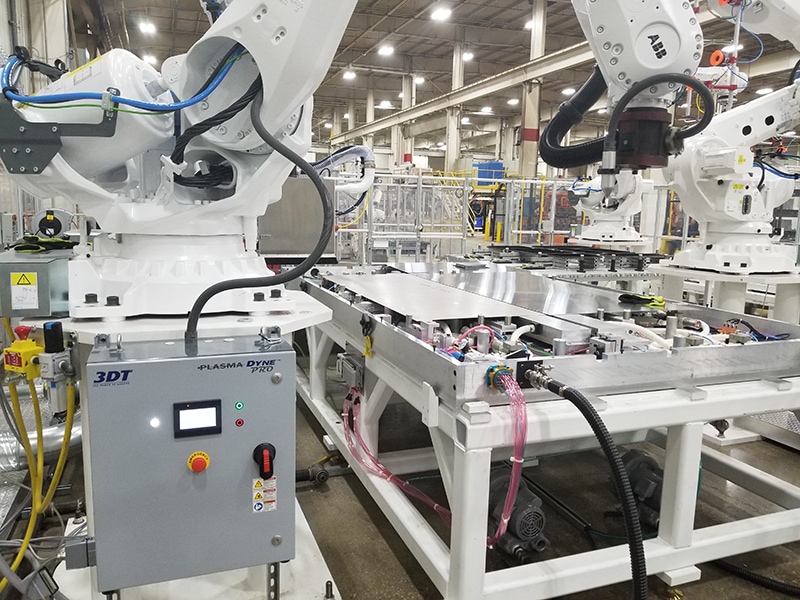
Here PlasmaDyne PRO is fitted to a robotic arm to quickly plasma treat defined areas of parts.
What are the benefits and challenges of this particular treatment?
Because atmospheric plasma is nearly potential-free, one important advantage is that plasma treatment can be incorporated into conductive, semi-conductive and non-conductive applications.
Plasma is effective for cleaning surfaces by removing impurities, contaminants, residue and organic compounds. This process, called micro cleaning or etching, provides another important aspect in improving adhesion. What’s more, surface activation by plasma treatment is exceedingly fast, effective, economical and environmentally safe.
What are 3DT’s surface treatment options for printing and decorating on plastics?
3DT LLC provides a complete line of corona and plasma surface treating systems designed to overcome many adhesion challenges. We offer standard and custom-built systems and application development.
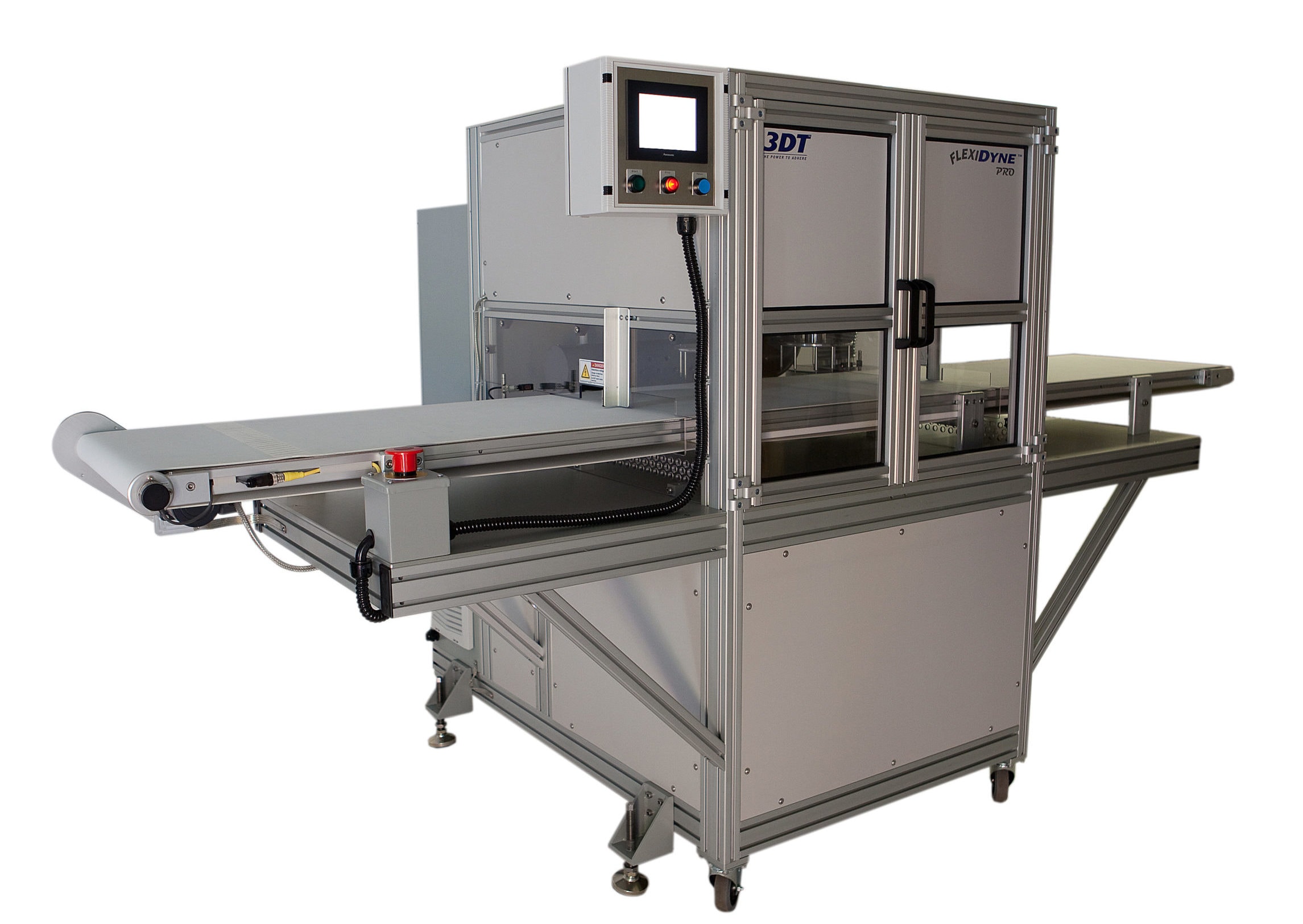
Our 3DT FlexiDyne PRO system is a conveyor-based corona treating system that utilizes rotating electrodes to provide a wider treat area and uniform, repeatable treatment with high production rates.
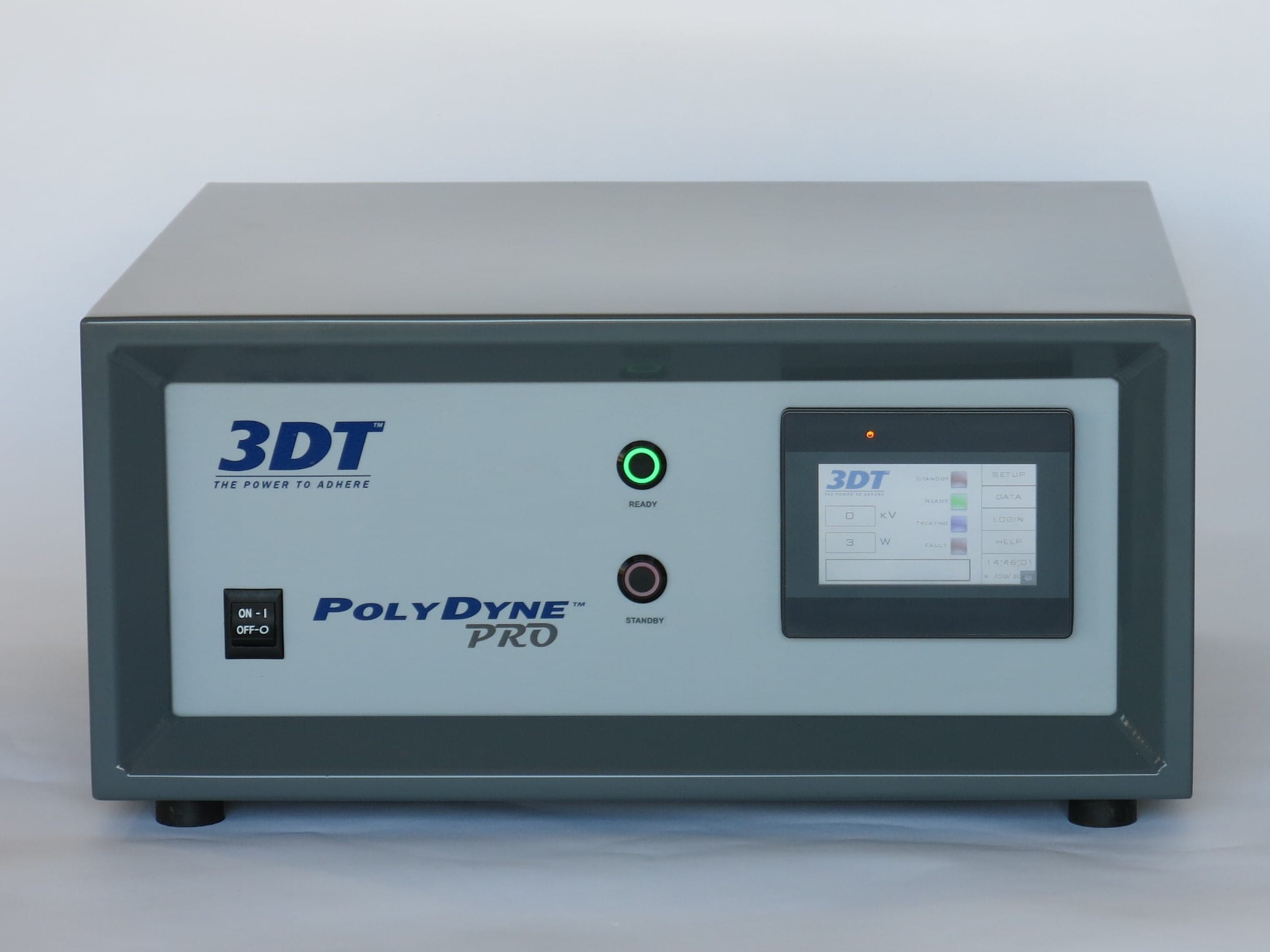
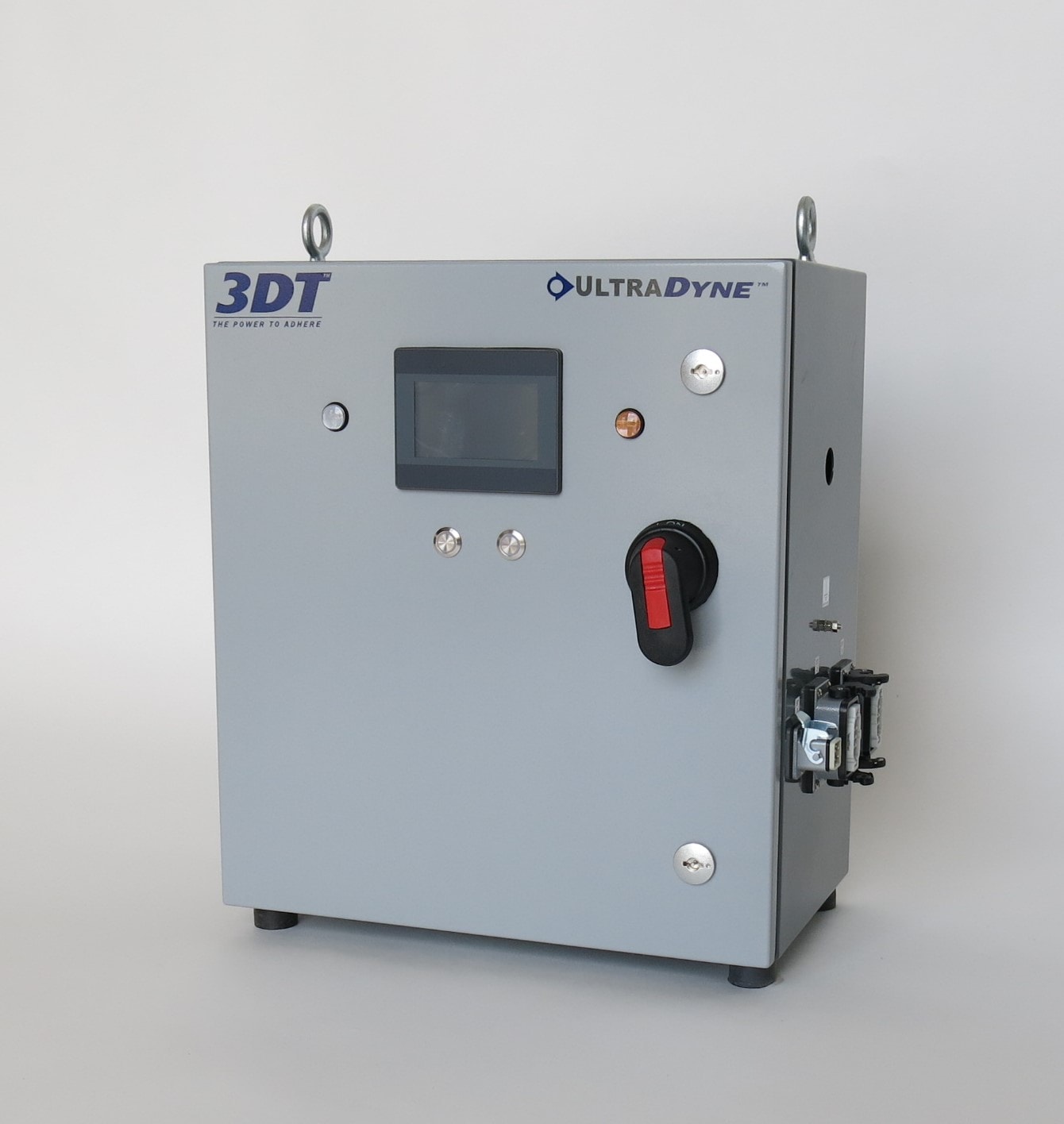
In order to treat individual parts and profiles, we can provide a corona treating system using our 3DT PolyDyne generator and high voltage transformer technology and electrode system designed specifically for the part/profile to be treated. Especially useful is our 3DT UltraDyne generator package designed for high speed cup and tube printing and decorating applications. UltraDyne provides consistent, strong high-frequency treating where other systems can’t.
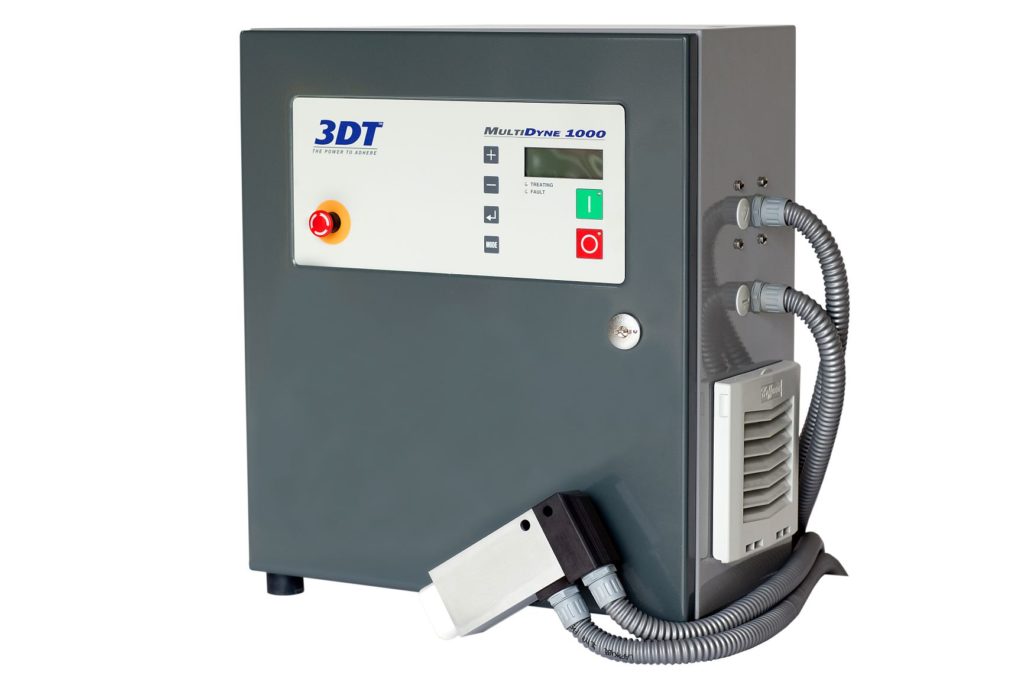
For surface treatment utilizing plasma technology, we offer our 3DT MultiDyne low frequency plasma system as well as our recently updated 3DT PlasmaDyne PRO system. The PlasmaDyne PRO system with adjustable power output is especially suited for today’s system requirements to be easily adjusted for process changes.
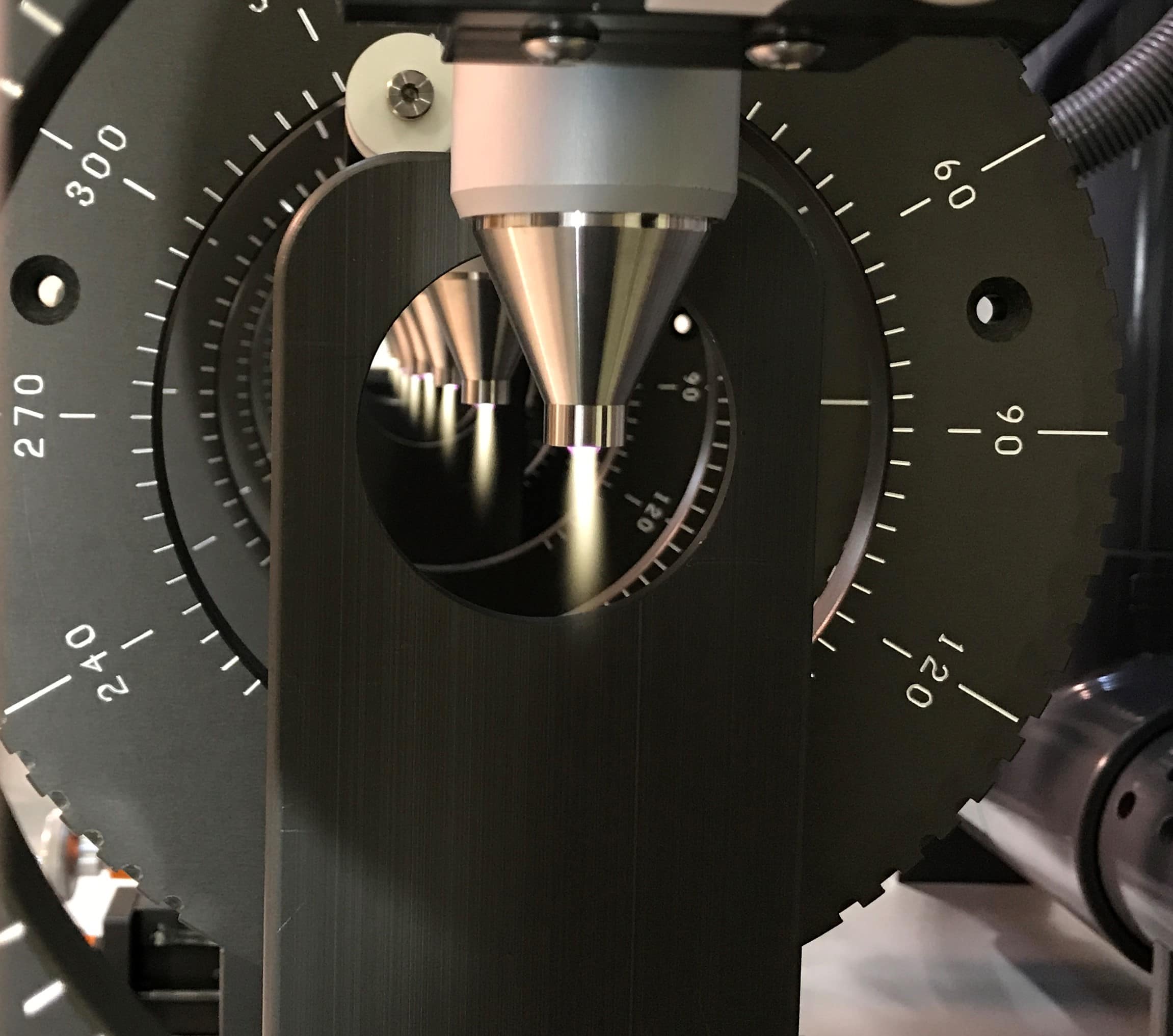
Custom PlasmaDyne PRO system with 8 treating heads and individual adjustments.
Gary Kohlnhofer has 38 years of experience in the plastics industry, 15 of those as Senior Sales Engineer with 3DT LLC. 3DT LLC is a manufacturer of surface treatment equipment, offering standard and custom-built systems and application development. Established in 1991, 3DT has been developing solutions for adhesion and bonding challenges for enumerable applications in all industry sectors. 3DT manufactures a complete line of corona and plasma systems incorporating robust design, proven technology and exceptional customer service with every standard and custom-engineered system. 3DT’s systems are designed and manufactured in Germantown, Wisconsin. For more information, visit www.3DTllc.com.