Skip to Content

Tag Archive: SOFTAL

  1. Company Spotlight – SOFTAL

    Comments Off on Company Spotlight – SOFTAL

    SOFTAL Corona & Plasma GmbH is an industry leader in designing and producing groundbreaking corona and plasma surface treatments for various materials, including plastic film, labels, textiles, paper, panels, metal, and more. Over 60 years of experience have made SOFTAL one of the most important companies in the surface treatment area.

    As SOFTAL has headquarters in Hamburg, Germany, 3DT LLC represents the company in sales, support, and service in the US and Canada. 3DT offers corona and plasma treatment systems for 2D and 3D applications, which 3DT and SOFTAL both manufacture.

    Who Is SOFTAL?
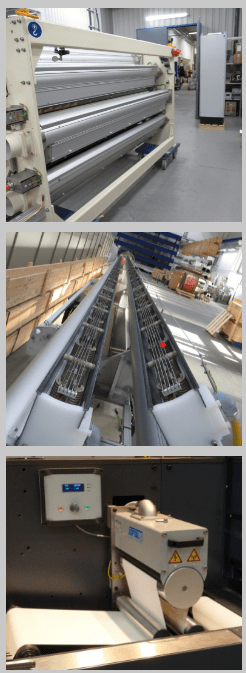
    SOFTAL was founded in the 1950s when the industrial use of corona technology was young. As that technology became essential to industries worldwide, SOFTAL led in its innovation and growth. Now a globally trusted company with patented processes, SOFTAL has mastered the manufacturing of premium bonding techniques for coatings, adhesives, and lacquers, increasing quality and productivity without primers.

    Although industry needs have changed over time, the SOFTAL promise of “adhesion guaranteed” has remained constant. “Adhesion guaranteed” symbolizes what SOFTAL is all about: the adhesion of your product customized for your processes, materials, and budget. SOFTAL has over 250 BOPP treatment stations and has produced over 10,000 corona stations, making it one of the most knowledgeable suppliers in the world.

    What Products Does SOFTAL Offer?

    SOFTAL offers a variety of surface treatment products such as:

    • Corona treatment systems – SOFTAL manufactures a complete line of corona treatment stations that improve the adhesion of glues, printing inks, lacquers, and other coatings to the surface of multiple materials. During corona treatment, corona energy is created when a dielectric barrier discharge (DBD) fires in the gap between the electrode and the counter electrode, causing a chemical reaction on the material being treated resulting increased adhesive forces.
    •  Plasma treatment systems – Plasma technology uses one or more high voltage electrodes which charge the surrounding blown gas molecules, resulting in a highly ionized field that is forced onto the targeted surface. This airstream, or plasma discharge, reacts with the substrate and breaks the existing hydrogen bonds altering the chemical properties of the surface. Plasma treatment is especially suited for functionalizing thicker and thermally sensitive material such as polymer foam and wide materials such as plastic sheets, glass and metal plates. Plasma is nearly potential-free allowing conductive materials, such as embedded electronics to be effectively treated.

    Benefits of SOFTAL

    ADHESION GUARANTEED!

    SOFTAL offers several advantages to its customers worldwide:

    • Install and forget. SOFTAL understands that the bottom line for most companies is a product that works and is simple to maintain. Therefore, all of SOFTAL’s user-friendly, modular products are durable, safe, cost-efficient, and easy to fix and service.
    • Adhesion guaranteed. SOFTAL’s slogan of guaranteed adhesion means that no matter how large its customer base gets, it will never forget its roots or what matters to you. Its treatment systems are modular, so SOFTAL is constantly growing, improving, and developing new processes and systems for its customers’ benefit.
    • Customer-specific interfaces and solutions. Its hardware and software solutions enable SOFTAL to customize all of its systems to fit with your materials and processes. As a result, you can concentrate on your core competencies, and SOFTAL and 3DT will handle the surface treatment of your materials.
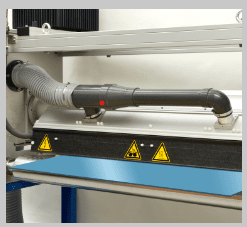
    • Reliable service. SOFTAL is proud of its strong reputation and high level of customer satisfaction. With its network of trained, worldwide professionals, like us here at 3DT, SOFTAL can be almost anywhere in a matter of hours to solve your problem.

    SOFTAL Services With 3DT

    SOFTAL’s reliable commitment to easy-to-maintain products, adhesion solutions, customized answers, and fast service has made them a strong partner for 3DT.

    Through a range of comprehensive and custom services, 3DT utilizes its 30 years of experience in quality adhesive and surface treatment solutions to offer dedicated customer service. Recognized throughout the world for our innovations in plasma and corona surface treatments, we serve numerous industries, including the packaging, automotive, electrical, food and drug, and medical sectors.

    Find out more about SOFTAL products here.

    As a representative for SOFTAL in the USA and Canada, contact us at 3DT or request a quote today for more information on what our companies can do to help.
  2. Gentle Plasma – Surface Treatment for Sensitive Materials

    Comments Off on Gentle Plasma – Surface Treatment for Sensitive Materials

    Pre-treating sensitive materials presents a significant challenge for many converters. In these applications, plasma treatment is often the preferred solution.

    Achieving improved adhesion through corona pre-treatment depends largely on selecting the correct corona dosage — the relationship between power, web speed, and working width. In most production environments, however, the process or material requirements dictate the web or line speed, limiting flexibility in treatment settings.

    Converters working with delicate substrates or very low web speeds often encounter another challenge: corona power can typically only be reduced to about one-third of its maximum output before the discharge becomes unstable and non-uniform.

    One method of lowering the treatment level while maintaining a more even discharge is pulsed corona treatment. However, the energy contained in each individual pulse can still be relatively high, potentially causing surface damage or excessive pre-treatment. In addition, streamers — localized high-energy discharges that are common in conventional corona processes — can be especially harmful to sensitive materials such as foams and optical films.

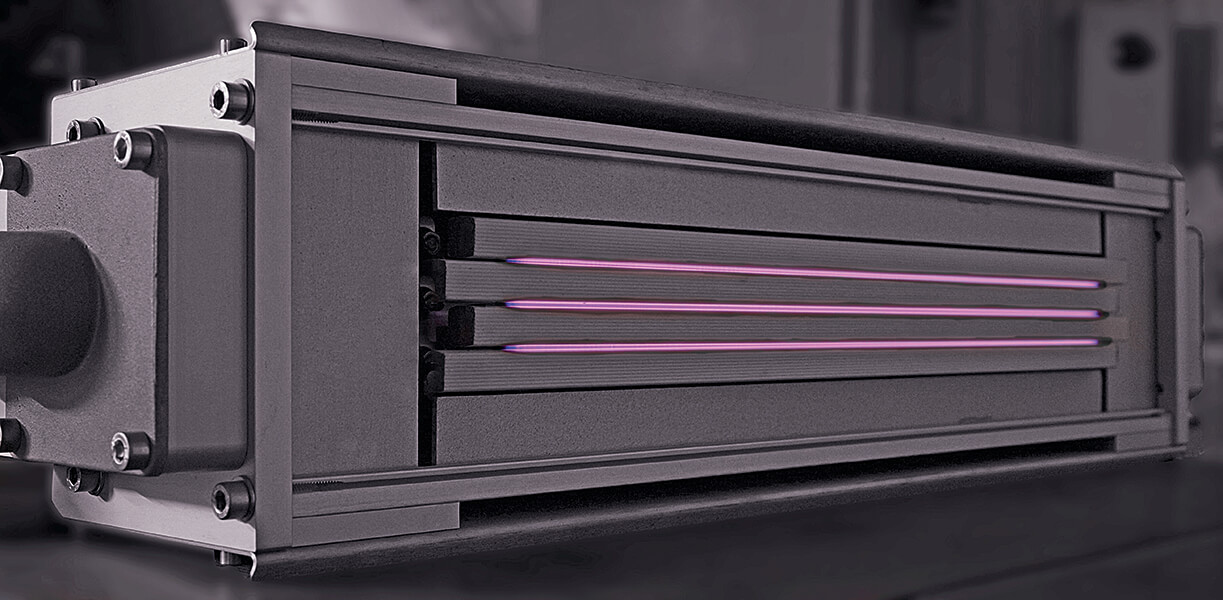
    To address these challenges, Hamburg-based SOFTAL Corona & Plasma developed its patented LinearPlasma system. LinearPlasma is an indirect plasma pre-treatment technology derived from corona treatment principles but designed specifically for delicate substrates.

    Unlike conventional corona systems, plasma treatment with LinearPlasma contains no voltage potential at the substrate surface. As a result, there are no streamers and no strong electrical fields that could damage sensitive materials. The process delivers an extremely low-energy discharge to the substrate surface, minimizing the risk of film damage commonly associated with standard corona treatment.

    This indirect plasma technology also enables the effective treatment of thick materials such as foams, rigid plates, and glass. An additional advantage is that the process does not generate ozone within porous materials, eliminating the possibility of ozone release later in the production line that could potentially affect equipment or raise health concerns.

    Beyond traditional converting applications, SOFTAL’s LinearPlasma technology is also well suited for the surface treatment of printed electronics. These increasingly common materials are used in advanced packaging structures and technical film laminates. Conventional corona treatment can damage conductive circuits embedded within these materials due to exposure to electrical fields. Because LinearPlasma provides a potential-free, non-conductive treatment process, these sensitive electronic structures remain protected.

    SOFTAL specifically engineered the LinearPlasma process for printed electronics and other sensitive applications requiring potential-free pre-treatment. Whether conductive elements are located on the surface or embedded within the substrate, the material is not exposed to damaging electrical fields, ensuring that delicate conductive structures remain intact.

    In conclusion, converters seeking improved adhesion of inks, adhesives, laminates, and coatings on delicate materials — including sensitive foams, optical films, and printed electronics — can benefit from SOFTAL’s LinearPlasma technology.

    3DT represents SOFTAL Corona & Plasma in the USA and Canada. Learn more on 3DT’s SOFTAL page or contact a sales engineer at sales@3DTLLC.comSOFTAL’s LinearPlasma system

    Best regards,
    Florian Brehmer
    CTO SOFTAL Corona & Plasma


  3. Corona Laboratory Table from SOFTAL

    Comments Off on Corona Laboratory Table from SOFTAL

    Designing a printing or coating process is a tricky thing. Not only during specification of new lines, but even in existing production lines, the coatings and inks always need to be matched to the surface tension of the substrate. Typically, a substrate is treated with corona, increasing the surface tension of the substrate and, thereby, matching the substrate to the ink or coating. Not only in development, but also in production the question arises, how intense should the corona treatment should be? This is especially the case when using older, pre-treated materials that have lost surface tension due long storage periods and requiring refreshment treatment.

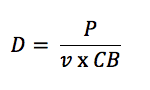
    Corona treatment is always characterized by the amount of corona dosage or discharge. The dosage (D) describes the energy put into one m2 of the substrate, measured in [Wmin/m2]. It can be calculated by dividing the applied corona power (P) through the web speed (v) and the electrode width (CB) of the corona system:

    Corona treatment is always characterized by the amount of corona dosage or dischargeThe applied Corona dosage couples the corona power to the web speed and can be set in direct relation to the achievable dyne level on the substrate surface. The critical task in designing or optimizing a printing or coating process is to determine the right corona dosage that is high enough to enable the process but not overtreat and thus damage the substrate.

    Deciding on the right corona dosage is ideally done on test samples in a lab environment. Here, only small amounts of material are used to determine the dosage parameters, resulting in reduced cost and waste. Importantly, production lines remain open for production instead of time consuming testing and development tasks.

    SOFTAL solves these issues in the form of a fully integrated Laboratory Table Corona system, the LTC. The motorized substrate holder moves at speeds up to 50 m/min under the 230mm wide corona electrode. This electrode can provide 10 W up to 400 W of power, enabling dosages from to 1 to over 1500 Wmin/m2. The motor itself guarantees a constant speed under the electrode, hence fully reproducible treatment results. Moreover, generator, transformer, drive and ozone destruction are completely integrated in the system, eliminating any requirement for peripheral equipment. Therefore, all the flexibility that is needed in a process engineered laboratory is given to treat conductive as well as non-conductive samples, specifying the exactly right corona dosage needed for the new product.

    Furthermore, by using the LTC, surface treatment know-how can be substantially increased at the production facility while minimizing uncertainties caused by transport and storage from external laboratories. Old, pre-treated and long stored material can be easily tested on site with minimal waste and assigned the correct dosage for refreshment treatment.

    For more information about the LTC, SOFTAL’s lab system, click here.

    Kind Regards,

    Florian Brehmer
    CTO SOFTAL Corona & Plasma